How to Calculate CPP (Cents Per Point) on a Point Auction
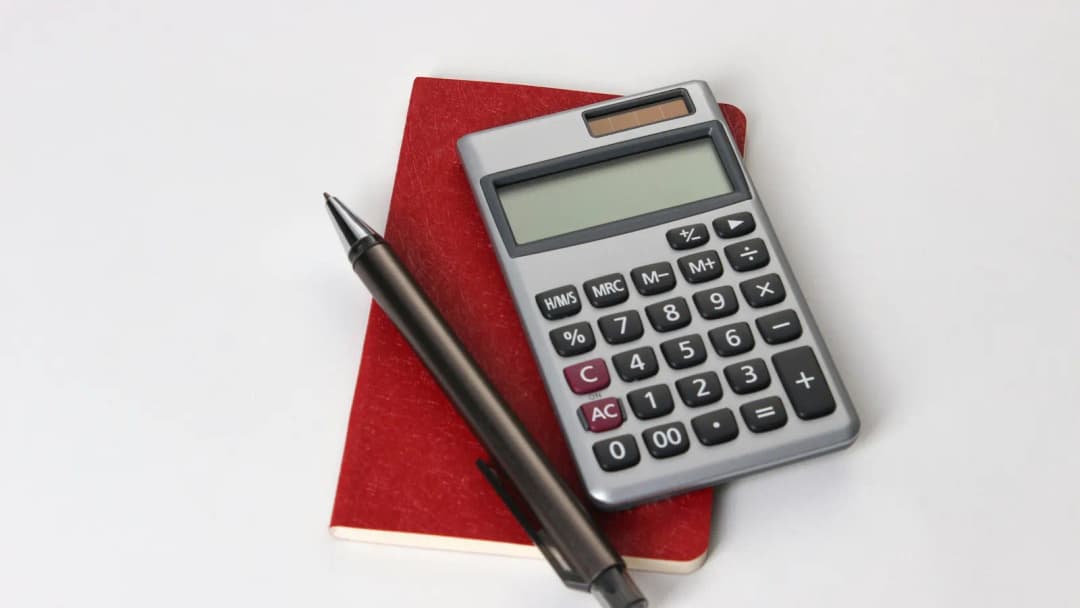
To calculate cents per point (cpp), also called cost per point, divide the cash price you would otherwise pay by the number of points, then multiply by 100. If a pair of seats would cost you $400 and the auction is at 50,000 Marriott Bonvoy points, that is 400 ÷ 50,000 × 100 = 0.8 cents per point. The bid is worth making only if 0.8 beats what those points usually get you.
The math is the same on every program. To try it on a real auction, pick one from the live point auction listings or from the live Marriott Bonvoy Moments auctions, the program the example below uses, and check what similar auctions closed at in the closed-auction archive before you set a number.
How to calculate cpp: the formula
cents per point = (cash price ÷ points) × 100
Two variations are worth knowing:
- With cash costs on top. If the redemption still leaves you paying cash (taxes, a resort fee, the flight to get there), subtract it first: cpp = ((cash price − cash you still pay) ÷ points) × 100. A straight point auction win usually carries no cash charge, but the trip to the event does.
- The walk-away bid. Turn the formula around to get the most you should bid: maximum points = cash price ÷ (baseline cpp ÷ 100). With a $400 cash price and a 0.75-cent baseline, that is 400 ÷ 0.0075 = 53,333 points. Above that, the same points would do better on an ordinary redemption.
Both inputs are yours to set, but the cash price is the easier one to inflate. Use what you would have paid for the same seats, stay or table, not the sticker value on a hospitality package, not a resale peak, and not the value of extras you would have skipped.
An inflated cash price makes any bid look good. Pick the number before you look at the current bid, and leave out anything you would not have paid for in cash.
Worked example: one cash price, four bids
Assumption for this table: you would have paid $400 in cash for a pair of seats. That figure is an example input, not a price for any real listing; replace it with your own. Baseline: Marriott Bonvoy at 0.75 cents per point, The Points Guy's October 2026 valuation (published October 1, 2026).
| Bid in Marriott Bonvoy points | cpp at a $400 cash price | Beats a 0.75-cent baseline? |
|---|---|---|
| 30,000 | 1.33 | Yes |
| 42,500 | 0.94 | Yes |
| 50,000 | 0.80 | Yes, narrowly |
| 60,000 | 0.67 | No |
The walk-away bid at these assumptions is 53,333 Marriott Bonvoy points. Swap in One Mile at a Time's 0.7-cent Marriott figure and it moves to 57,143 points. The answer changes every time the bid or your cash price changes, so run it before you enter a maximum.
Baselines to compare against
A cpp result only means something next to what the same points return on an ordinary redemption. Two outlets publish point values, and they disagree enough that you should treat each figure as an adjustable assumption:
| Program | The Points Guy (October 1, 2026) | One Mile at a Time (October 2026 page) |
|---|---|---|
| Marriott Bonvoy | 0.75 cents | 0.7 cents |
| Hilton Honors | 0.4 cents | 0.5 cents |
| Wyndham Rewards | 0.55 cents | 0.6 cents |
| Choice Privileges | 0.85 cents | 0.6 cents |
| World of Hyatt | 1.65 cents | 1.4 cents |
| IHG One Rewards | 0.6 cents | 0.5 cents |
| United MileagePlus | 1.2 cents | 1.3 cents |
| Delta SkyMiles | 1.2 cents | 1.1 cents |
| Alaska Atmos Rewards | 1.55 cents | 1.5 cents |
| American AAdvantage | 1.45 cents | 1.5 cents |
| Emirates Skywards | 1.2 cents | 1.2 cents |
Sources: The Points Guy monthly valuations, dated October 1, 2026, and One Mile at a Time's points and miles values (October 2026 page). The two are built differently: The Points Guy calculates the hotel values in this table with data from Gondola and the airline values it marks with an asterisk with data from Points Path, while One Mile at a Time's figures are the author's own estimates, which he describes as "conservative by design". If you reliably get more from a currency than either column, use your own figure.
Two programs work differently enough to have their own posts. Accor ALL attaches a fixed cash value to its points, which turns the question into one subtraction: see the Accor ALL points arbitrage calculator. Capital One prices its own entertainment redemptions at a fixed rate: see the Capital One 0.8-cent trap.
Real closes to run the math on
Every close below is a verified final: the program confirmed the result after the auction ended. Where the listing recorded bids, the count is given. We publish the points and stop there; the cash side is yours.
Same suite, different results. Marriott Bonvoy posted twelve two-ticket Suite Seats for Hilary Duff at The O2 packages, six for the September 10, 2026 show and six for September 15, each with a 30,000-point opening bid. The six for September 10 closed on August 24, 2026 and sold for 32,500 to 40,000 Marriott Bonvoy points on one to three bids each. Of the six for September 15, closed on August 31, 2026, package 1 sold for 42,500 Marriott Bonvoy points after six bids, and package 3 and the other four each sold for 30,000 Marriott Bonvoy points on one bid. With one cash price, package 1 costs 42% more points than a 30,000-point package, so its cpp is about 29% lower.
A low baseline makes the same number of points a smaller commitment. The Ultimate Broadway Experience: WICKED The Musical closed at 310,000 Hilton Honors points, a verified final with no bid count recorded. The Points Guy values Hilton Honors at 0.4 cents, its lowest hotel figure in the table, and One Mile at a Time at 0.5 cents, tied with IHG for its lowest. So a six-figure Hilton bid is a smaller commitment than the same number of Hyatt or Marriott points. Divide the cash price by the points, then compare the result with that program's baseline, never another program's.
Two similar auctions, more than four times apart. Houston vs. Texas Tech (2 passes), for the game played on Friday, September 18, 2026 (the listing's title says September 19), sold for 20,000 Choice Privileges points after two bids. South Carolina vs. Alabama, September 26, 2026 (2 passes) sold for 85,000 Choice Privileges points, also after two bids. Both closed on September 3, 2026. The points are 4.25 times apart; only if the two games were worth the same in cash would the first cpp be 4.25 times the second. Run the math on each listing.
A 43-bid auction. VIP Experience + Hotel Stay - Inter Miami CF sold for 1,523,500 Marriott Bonvoy points after 43 bids. At a 0.75-cent baseline, the cash price would need to top $11,426.25 for that bid to beat an ordinary Marriott redemption. This is the kind of package where a cash price you can stand behind is hardest to find.
When there is no cash price
Many of these experiences have no cash price you can look up: a suite with a host, a pre-game field visit, a backstage meet and greet. Two workable approaches:
- Build the price from parts you can buy. The hotel night at its cash rate, a standard seat in the same section, the dinner at menu prices. What is left over is the premium you are paying for access; call it that rather than folding it into the cash price.
- Skip the math. Decide whether you want it, and how many points you are happy to spend. That is a fair way to decide. Do not use the program's own sticker value just because it is the only figure on the page.
When to walk away
- A set maximum matters most in a quiet auction, because fewer bidders decide the final price. Of the 3,590 trusted closes in our archive that carry a bid count (3,178 verified finals and 412 last-seen closes), 1,289 (35.9%) drew fewer than five bids, as of October 9, 2026. Our guide to point auctions that draw fewer than five bids shows where the quiet ones sit.
- Check for identical packages. Programs often list the same experience several times. The twelve Hilary Duff packages above ended anywhere from 30,000 to 42,500 Marriott Bonvoy points, so the price one package reached tells you little about the next.
- Set the maximum once. Work out the walk-away bid, enter it, and leave it. If bidding goes past it, stop: your points keep their ordinary value.
Frequently asked questions
How do you calculate cpp?
Divide the cash price by the number of points, then multiply by 100. A $400 cash price against a 50,000-point bid is 400 ÷ 50,000 × 100 = 0.8 cents per point. Compare the result with a baseline for that program, such as The Points Guy's 0.75 cents for Marriott Bonvoy (October 1, 2026).
What is a good cpp for Marriott Bonvoy points?
Anything above what Marriott points return on an ordinary redemption. The Points Guy values them at 0.75 cents (October 1, 2026) and One Mile at a Time at 0.7 cents (October 2026 page). Treat both as adjustable assumptions.
How do I work out the most I should bid?
Divide your cash price by your baseline in dollars per point (0.75 cents is $0.0075). With a $400 cash price and a 0.75-cent baseline, the maximum is 400 ÷ 0.0075 = 53,333 points. At One Mile at a Time's 0.7 cents for Marriott, it is 57,143 points.
Should I include taxes and fees in the cpp calculation?
Yes. Subtract any cash you still pay from the cash price before dividing. With an assumed $400 cash price and $60 still due in cash, a 50,000-point win is (400 − 60) ÷ 50,000 × 100 = 0.68 cents per point. A straight point auction win usually carries no cash charge, but travel to the event and any extras you pay for do.
Keep reading
New to bidding? Start with how point auctions work, and see what closed point auctions reveal about each program.